The Science of Scaling: Grow Your Business Bigger and Faster Than You Think Possible by Dr. Benjamin Hardy and Blake Erickson is a business growth book written for entrepreneurs, founders, executives, coaches, consultants, and ambitious business owners who feel that their company has reached a ceiling. Instead of treating growth as a matter of working longer hours, hiring more people, or adding more tools, the book challenges readers to rethink the entire structure of their business. Its central message is clear: scaling is not simply about doing more. It is about redesigning the business so that bigger results become possible with better systems, clearer goals, stronger leadership, and a more scalable model.
At its best, this book feels like a direct conversation with a business owner who is tired of slow progress. Many entrepreneurs start with energy, creativity, and personal effort. They close sales, serve customers, solve problems, and push the company forward through force of will. That approach can work in the early stage, but it often becomes the very thing that blocks the next level of growth. The Science of Scaling argues that once a business reaches a certain point, effort alone is not enough. The founder must move from being the engine of the business to becoming the architect of a business that can grow beyond their personal capacity.
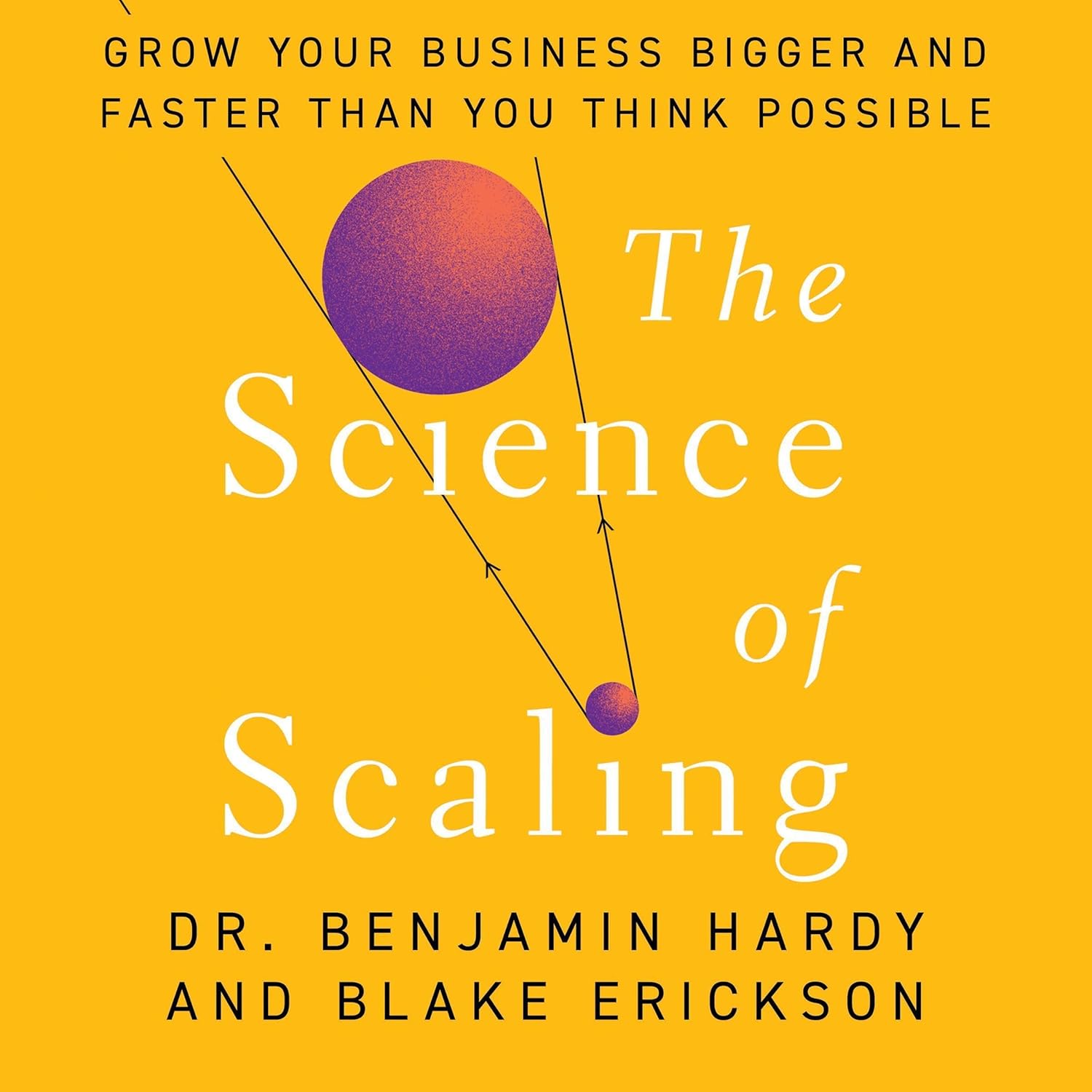
The Science of Scaling Review: A Practical Book for Entrepreneurs Who Want to Grow Bigger and Faster
What The Science of Scaling Is Really About
The most valuable idea in The Science of Scaling is that growth and scaling are not the same thing. Growth can happen through more activity: more calls, more meetings, more campaigns, more employees, and more spending. Scaling, however, requires a business model that can produce larger outcomes without increasing complexity at the same rate. This distinction is important because many companies confuse busyness with progress. They become larger, but not necessarily stronger. They generate more revenue, but also more stress, more management problems, and more dependency on the founder.
Hardy and Erickson focus heavily on the concept of an “impossible goal.” This does not mean setting a random fantasy target. Rather, it means choosing a goal so ambitious that it exposes the weaknesses in the current business model. A small goal allows a company to keep operating in familiar ways. A bold goal forces leaders to ask more serious questions: What must be removed? What must be simplified? Who must be empowered? Which systems need to change? Which customers, offers, processes, or habits are no longer scalable?
This is where the book becomes more than motivational reading. It encourages entrepreneurs to use time, constraints, and ambition as strategic tools. Instead of asking, “How can we do slightly better next year?” the reader is pushed to ask, “What would need to be true for this business to become dramatically bigger and better in a much shorter period?” That question can be uncomfortable, but it is also useful. It moves the reader away from incremental thinking and toward structural change.
Key Lessons from the Book
1. Scaling Starts with Clarity
One of the strongest themes in the book is clarity. A company cannot scale if its direction is vague. Many founders say they want growth, but they have not defined the exact outcome they are trying to create. Without a clear target, the team becomes reactive. Marketing, hiring, sales, product development, and operations all move in different directions. The book suggests that the starting point of scaling is not a tactic but a sharply defined destination.
This lesson is especially relevant for small and mid-sized businesses. A founder may have ambition, but if the team does not understand the mission, the business becomes dependent on constant correction from the top. Clarity allows people to make better decisions without waiting for permission. It also makes it easier to identify what should be ignored. In scaling, saying no is often as important as saying yes.
2. Complexity Is the Enemy of Scale
Another important lesson is that many businesses do not fail to scale because they lack opportunity. They fail because they carry too much complexity. Too many offers, too many customer types, too many manual processes, too many approval layers, and too many distractions can make growth fragile. The bigger the company becomes, the more these weaknesses multiply.
The Science of Scaling encourages readers to simplify the business model. This may mean focusing on the most profitable customers, strengthening the core offer, removing low-value tasks, or creating repeatable systems. The point is not to make the business small. The point is to make it clean enough to expand. A simple model is easier to communicate, easier to sell, easier to hire for, and easier to improve.
3. The Founder Must Stop Being the Bottleneck
Many business owners will recognize themselves in this part of the book. In the early days, the founder often makes every important decision. They approve content, handle clients, lead sales, manage staff, solve emergencies, and protect quality. But as the business grows, this habit becomes dangerous. If every decision depends on one person, the company cannot move faster than that person’s attention span.
The book makes a strong case for building a team and culture that can operate without constant founder involvement. This does not mean the founder disappears. It means the founder must design roles, standards, systems, and leadership structures that allow capable people to produce results. In this sense, scaling is deeply connected to trust. A business grows faster when the right people are empowered to own outcomes instead of merely completing tasks.
Who Should Read The Science of Scaling?
This book is best for entrepreneurs who already have some traction. If someone is still searching for a business idea, this may not be the first book they need. But for a founder with revenue, customers, staff, and operational pressure, The Science of Scaling can be highly useful. It speaks directly to the stage where the business is working, but the current model feels too heavy to grow much further.
It is also useful for agency owners, consultants, coaches, online business operators, SaaS founders, service-based entrepreneurs, and leadership teams that want to move from founder-led growth to system-led growth. Readers who enjoy books about business strategy, leadership, productivity, company culture, and organizational design will likely find many practical ideas here.
The book may be less appealing to readers who want a step-by-step technical manual with templates, financial models, or detailed operational checklists. Its strength is not in giving one universal formula for every company. Its strength is in changing the way leaders think about scale, ambition, time, and business architecture. For some readers, that mindset shift may be more valuable than a tactical worksheet.
Strengths and Weaknesses of the Book
The biggest strength of The Science of Scaling is its ability to challenge comfortable thinking. Many business books repeat familiar advice about hard work, discipline, leadership, and persistence. This book goes deeper by questioning whether the current structure of the business is capable of producing the desired future. That makes it especially powerful for entrepreneurs who are stuck at a plateau.
Another strength is its emphasis on simplification. In real business, growth often creates noise. Leaders add more products, more platforms, more meetings, and more management layers. The book reminds readers that scale usually requires subtraction before multiplication. Removing what does not scale can create more progress than adding another tactic.
However, one possible weakness is that the book’s ambitious tone may not fit every reader. Some business owners prefer conservative, gradual growth. Others operate in industries with heavy regulation, capital limits, local market restrictions, or long sales cycles. For them, the language of rapid scaling may feel aggressive. Still, the underlying principles—clarity, simplification, better systems, stronger leadership, and reduced founder dependency—remain valuable even for slower-growth companies.
Final Verdict
The Science of Scaling: Grow Your Business Bigger and Faster Than You Think Possible is a strong business book for readers who want to escape incremental growth and think more strategically about scale. It is not just about motivation, and it is not simply about chasing bigger numbers. It is about building a business that can support bigger outcomes without collapsing under complexity.
The book’s central value lies in its challenge to the founder’s mindset. If your business depends too heavily on your personal effort, your approval, your relationships, or your daily problem-solving, then scaling will always feel difficult. Hardy and Erickson push readers to redesign the business around clarity, systems, talent, and a bigger strategic vision. That makes the book useful not only for entrepreneurs chasing rapid expansion, but also for any leader who wants a company that is simpler, stronger, and less dependent on constant hustle.
Overall, this is a worthwhile read for business owners who feel they are capable of more but cannot get there with their current structure. It will not magically scale a company overnight, but it can help leaders ask better questions. And in business, better questions often lead to better systems, better decisions, and ultimately better growth.